


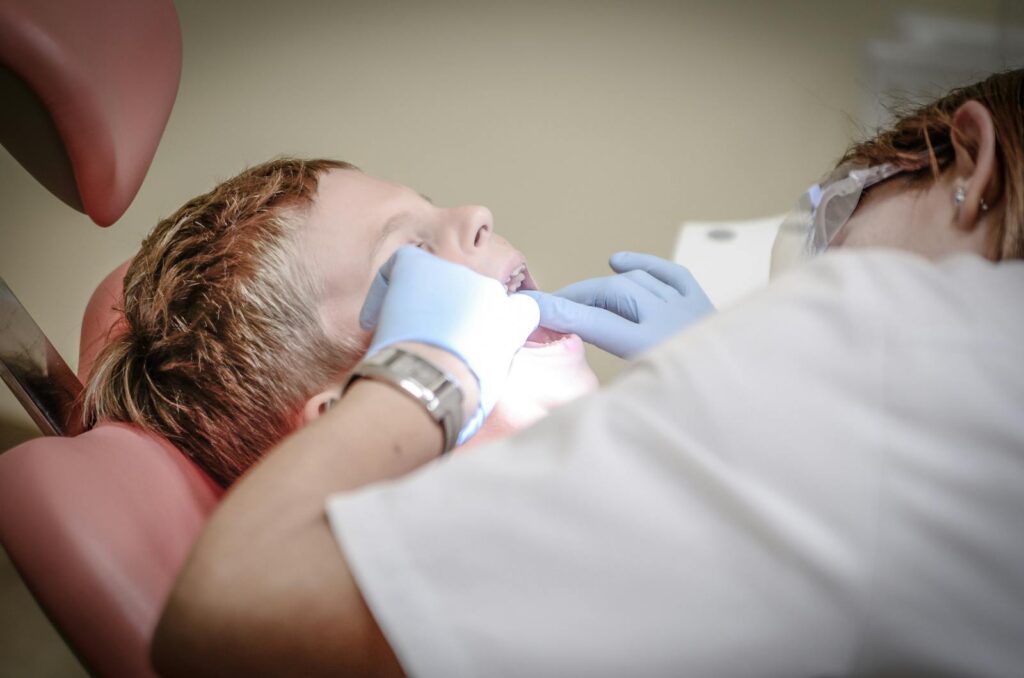
Root canal treatment in Jeddah is the procedure that saves a tooth from extraction. At AQUA Dent, it's performed by Dr. Obadah Austah — ABE (American Board of Endodontics) certified consultant from UTHSCSA, editorial board member of the Journal of Endodontics. This complete guide explains: when you need a root canal, the difference between microscope-assisted and conventional technique, costs, pain, and success rates based on published research.
10 min read · By the AQUA Dent team · May 2026
30-second summary
- When you need it: Persistent pain, severe hot/cold sensitivity, swollen gum, or tooth color change.
- Cost in Jeddah 2026: SAR 1,100–3,500, depending on the tooth and the complexity of the case.
- Number of visits: Usually 1–2 (60–90 minutes each).
- Pain: Done under local anesthesia, so most patients feel little or no pain during treatment.
- Success rate: 86–98% for microscope-assisted treatment per Journal of Endodontics research.
- Follow-up: Usually needs a crown afterward to protect the tooth.
What is a root canal and how it works
Every tooth contains an internal pulp made of nerves and blood vessels. If the pulp becomes inflamed or dies (from deep decay, fracture, or trauma), problems begin: pain, swelling, abscess. Root canal treatment removes the inflamed/dead pulp from the tooth's canals, cleans and disinfects the canals, then fills them with a special filling material (Gutta-percha) to seal them permanently.
A tooth after root canal treatment contains no pulp — it becomes a dead tooth but stays functional. That's why it usually needs a crown to protect it from fracture.
When you need a root canal
Classic symptoms:
- Persistent and worsening pain in a specific tooth — especially when lying down.
- Severe hot/cold sensitivity that lasts more than 30 seconds after the stimulus is removed.
- Pain on chewing or pressure on the tooth.
- Swelling or redness in the gum around the tooth, sometimes with a fistula (white spot).
- Tooth color change (becomes darker than its neighbors) — a sign of pulp death.
- Pain that comes and goes with no obvious cause.
Sometimes the tooth needs a root canal without you feeling any symptoms — the dentist discovers it during a routine check via X-rays.
Types of root canal treatment
1. Initial root canal treatment (Initial RCT)
The first time the tooth undergoes treatment. The most common, with the highest success rate (95–98% with a microscope).
2. Endodontic retreatment
When a previous root canal fails and needs redoing. The old filling is opened, the material removed, and the canal re-cleaned and refilled. More complex and needs a surgical microscope. Priced after examination.
3. Apicoectomy (root tip removal)
A precise surgery to remove the inflamed root tip via a small gum surgery. For cases where conventional root canal and retreatment have failed. Priced after examination.
4. Pediatric pulp treatment (Pulpotomy/Pulpectomy for primary teeth)
For children — a simpler procedure for primary teeth. Priced after examination.
The surgical microscope — the real difference
The surgical microscope magnifies the view up to 25× — revealing extra canals, fine cracks, and broken instruments invisible to the naked eye. Dr. Obadah Austah explains when the microscope is decisive.
Research published in Journal of Endodontics documents:
- Conventional root canal success rate: 70–85%
- Microscope-assisted root canal success rate: 86–98%
- Microscope's ability to detect a fourth canal in the upper first molar: 93% (vs. 60% without microscope) — this fourth canal is the most common cause of conventional treatment failure.
When the microscope is decisive: multi-canal molars, retreatment, curved or narrow canals, presence of broken instruments. When it makes less of a difference: a simple initial root canal in a front tooth.
Root canal cost in Jeddah 2026
| Procedure | Price at AQUA Dent | Duration |
|---|---|---|
| Root canal (anterior, premolar or molar, with or without microscope) | SAR 1,100–3,500 | Depends on the tooth and case complexity |
| Endodontic retreatment | Priced after examination | 2 visits typically |
| Apicoectomy | Priced after examination | 90 min, single visit |
| Crown after root canal | SAR 3,500–5,000 | 2 visits, fitting after 2 weeks |
Step-by-step process
- Diagnosis (first visit — 30 min): Exam + panoramic X-ray + pulp sensitivity tests. For complex cases, a 3D CBCT scan to evaluate the canals.
- Local anesthesia: The tooth and surrounding gum are numbed, so most patients feel little or no pain during treatment.
- Tooth isolation (Rubber Dam): An isolating rubber to prevent saliva and bacteria from entering the tooth during treatment.
- Access the pulp: A small opening in the tooth crown to reach the canals.
- Cleaning and shaping the canals: Precise instruments to remove dead pulp and widen the canals. Here the microscope's role is critical.
- Sterilization: Wash the canals with sodium hypochlorite solution to kill bacteria.
- Filling: Gutta-percha + sealer to seal the canals permanently.
- Temporary restoration: Temporary filling to protect the tooth until the crown is fitted (2–4 weeks).
- Final crown: Usually necessary for molars to protect the tooth from fracture. Can be deferred for anterior teeth in some cases.
Success and failure rates
Per the standards endorsed by the American Association of Endodontists (AAE):
- Initial microscope root canal: 95–98% long-term success (10+ years).
- Conventional (no microscope) root canal: 70–85% success.
- Endodontic retreatment: 75–85% success.
- Apicoectomy: 70–90% success.
Most common causes of failure:
- An undetected canal (microscope reduces this).
- Insufficient sterilization.
- Delayed crown placement (the tooth fractures).
- Re-infection from new decay.
Aftercare
- First 24 hours: Avoid chewing on the treated side, take painkillers as needed (Panadol/Ibuprofen).
- First week: Soft food, avoid hard foods.
- Cleaning: Soft brush + 0.12% chlorhexidine mouthwash for 5 days.
- Antibiotics: Only if there's active infection (not routine).
- Crown: Place the crown within 2–4 weeks to prevent tooth fracture.
- Follow-up: Check after 6 months with X-rays to confirm complete healing.
Frequently asked questions about root canals
Q: Is a root canal painful?
A: No. Done under full local anesthesia. Discomfort after treatment (3–5 days) is controlled with simple painkillers. The painful tooth before treatment is what makes people afraid — the treatment itself ends the pain.
Q: How long does the full root canal take?
A: Anterior teeth: a single 60-minute visit. Molars: 1–2 visits (90 min each). Retreatment: 2 visits. Then 2–4 weeks before the crown.
Q: Why do I need a crown after root canal?
A: A tooth after root canal is brittle and breaks easily (especially molars). Research on PubMed documents that survival of posterior teeth without a crown after root canal drops to 50% within 5 years. Dr. Austah explains when a crown is essential.
Q: Is the alternative to root canal extraction?
A: Yes. The only alternative is extraction, then implant or bridge. Root canal preserves your natural tooth — and that's always better than the alternatives (if the tooth is salvageable).
Q: Is root canal safe during pregnancy?
A: Yes, especially in the second trimester (months 4–6). First and third trimesters: defer except for emergencies.
Q: Why did my old root canal fail?
A: Reasons: an undetected canal (the most common), incomplete sterilization, leakage from the filling/crown, or a fine root fracture. The surgical microscope solves most of these problems in retreatment.
Q: How does retreatment compare to extraction + implant?
A: Retreatment plus a new crown usually costs less than extraction plus an implant (SAR 9,300–9,800 for a single implant with its crown), and you keep your natural tooth. If the tooth is salvageable, retreatment is usually the better choice.
The first root canal consultation at AQUA Dent includes: exam + X-rays + a written treatment plan + a clear diagnosis of whether you need treatment or not.
Endodontics department at AQUA Dent →
Dr. Obadah Austah — endodontics consultant →
Try the cost calculator →